Full-Scale Shake-Table Testing of Light-Frame Timber Structures
Industry-sponsored research supported by The Home Depot and Simpson Strong-Tie
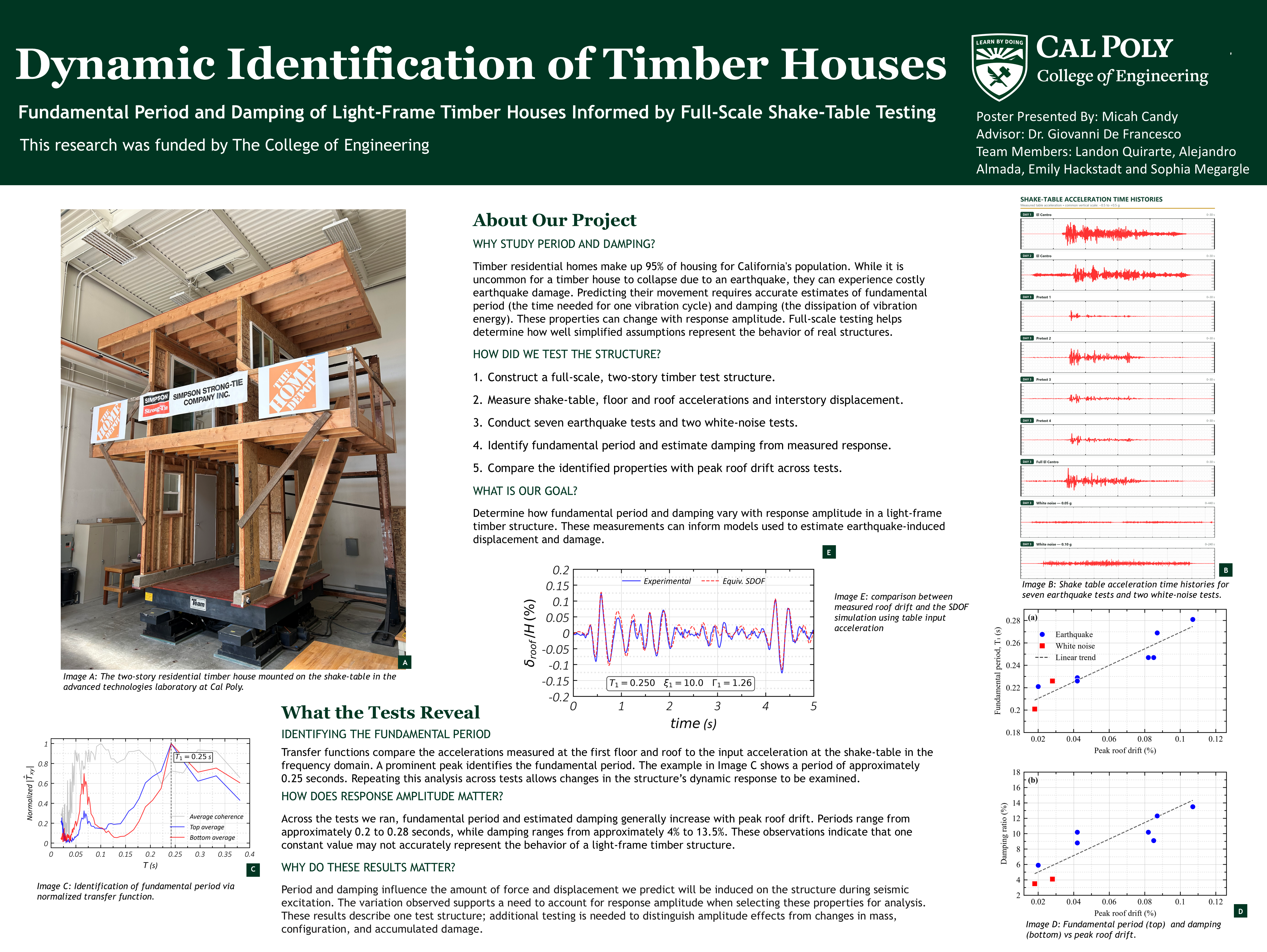
Overview
Led experimental testing and dynamic-response analysis of a full-scale, two-story light-frame timber structure subjected to earthquake and white-noise excitation. The following is a summary of the research from my paper's abstract:
The fundamental period and damping of a structure are the main dynamic characteristics used to determine the displacement and strength demand. In the literature, no single identification method has been consistently adopted for characterizing these dynamic properties for light-frame timber structures. This study uses the results of a large-scale shake table testing campaign on a full-scale and fully equipped two-story light frame timber structure to investigate it's modal properties. Emphasis is given to quantify how the fundamental period, deformed shape, and damping change with the displacement amplitude. The results highlight that the current code expression to quantify the fundamental period is generally conservative in terms of strength demand but results in unconservative estimation of the displacement demand. Experimentally informed relationships are developed to improve estimates of earthquake-induced displacement and damage within a performance-based earthquake engineering framework.
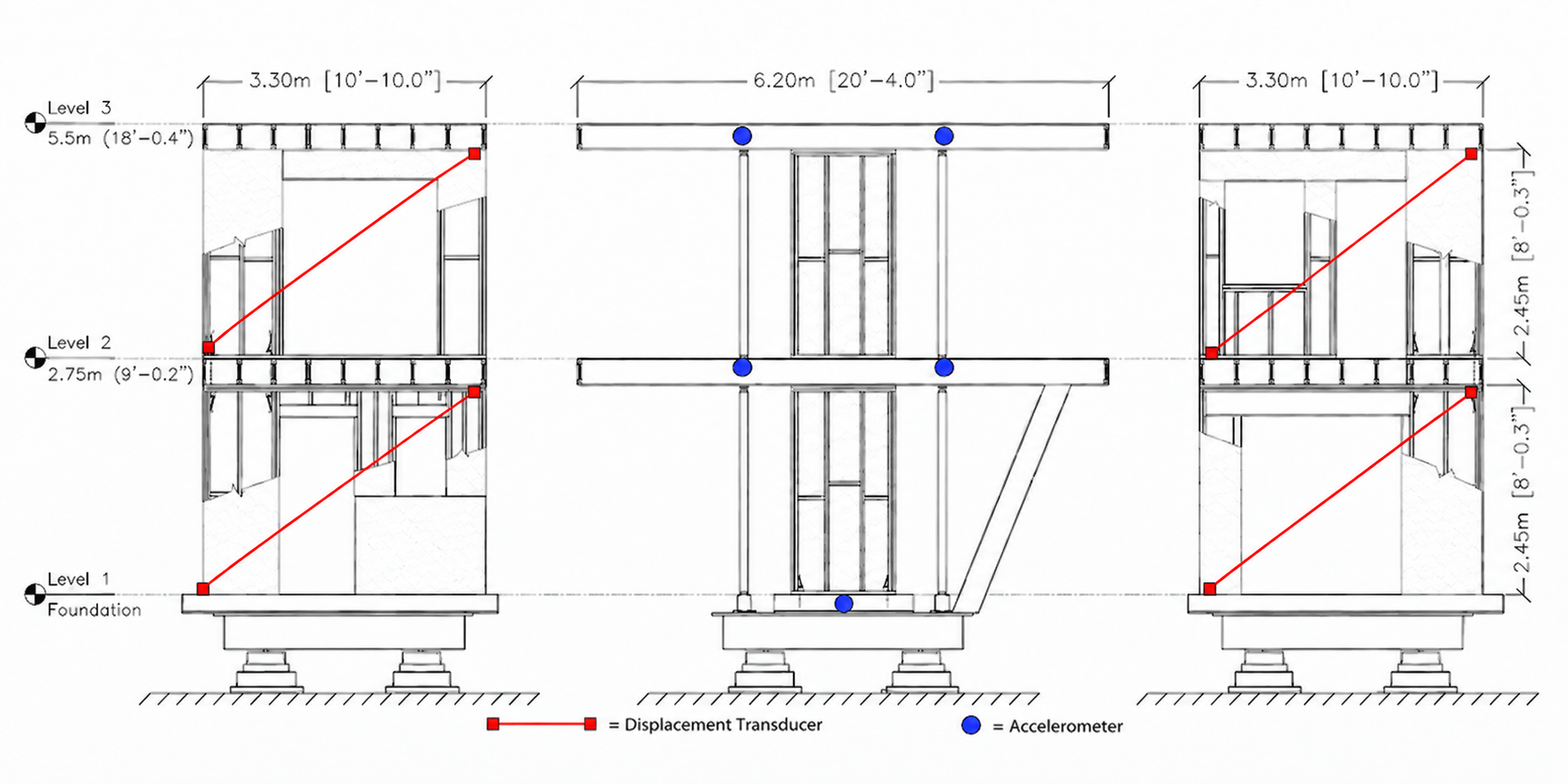
Testing & Instrumentation
Test planning and shake-table operation were supported by accelerometers, displacement transducers, NI DAQ hardware, and sensor calibration on a secondary shake table. I was the sole student tasked with using the shaker control software and establishing running procedures. I also handled the calibration and installation of all instrumentation on the structure.
Data Analysis
MATLAB and Python workflows for acceleration and drift time histories, signal filtering, FFTs, transfer functions, double integration, and SDOF response modeling. I solely conducted all data analysis and figure generation as well as interpretation of results.
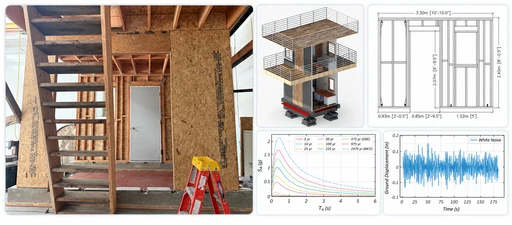
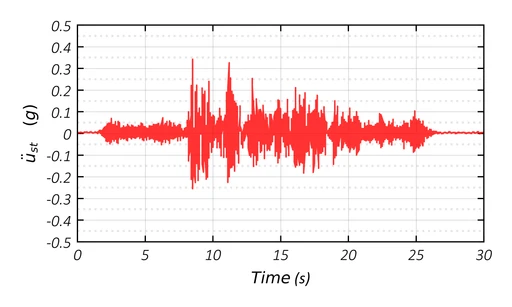
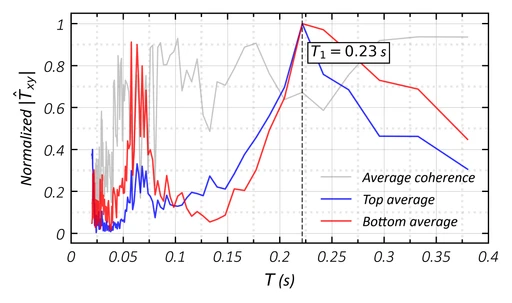
Identified changes in the structure’s fundamental period as drift increased, revealing amplitude-dependent structural behavior at low displacement levels.
Research Output
Research abstract submitted to the World Conference on Timber Engineering (WCTE).
Journal manuscript in preparation on dynamic identification of light-frame timber structures.